Iran’s human rights violations in the new World Report from Human Right Watch

During 2012 the Iranian authorities arrested, detained, and harassed some of Iran’s most celebrated rights lawyers, and stepped up their assault on critical journalists, bloggers, and their families. The judiciary issued death sentences based on non-serious, vague, or ill-defined crimes such as moharebeh, or enmity against God, and authorities executed several hundred prisoners. Discrimination, both in law and in practice, against Iran’s ethnic and religious minorities led to the arrests of dozens of Baha’is, Christians, and Sufi Muslims.

Sarah Leah Whitson

Sarah Leah Whitson, Human Rights Watch

“The Iranian people will neither forget nor forgive the abuses that the government has committed against human rights and minority activists, journalists and opposition leaders when it is time to head to the polls in June,” said the Middle East Director Sarah Leah Whitson. “Nor will they forget those such as Sattar Beheshti who have been made to pay the ultimate price in the struggle for a free Iran.”
Human Rights Watch
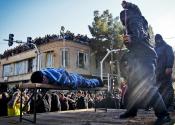
Media Crackdowns and Public Punishments in Iran

Iran has started an aggressive campaign of media crackdowns and Imagepublic punishments in recent days as the economy worsens and presidential elections grow closer.
Iranian human-rights groups say that although public executions happen on occasion in Iran, the uptick in them after rushed court judgments with no chance of appeal in recent days has been alarming.
Two influential and conservative news websites, Tabnak and Baztab, often critical of Mr. Ahmadinejad were shut down Monday, suggesting the media crackdown is targeted at any publication that challenges the regime’s narrative on political and economic issues.
Wall Street Journal

UN human rights officials urge Iran to stop execution of Ahwazi activists

The UN special rapporteurs  on human rights in Iran, on torture and Ahwazion executions have all urged Iran to halt the execution of five activists belonging to the Ahwazi Arab minority. The political activists have been sentenced to death on charges of corruption, propaganda and “enmity against God.”

“It is absolutely unacceptable for individuals to be imprisoned and condemned to death for exercising their rights to freedom of peaceful assembly, association, opinion and expression, and affiliation to minority groups and to cultural institutions,” said the Special Rapporteur on the situation of human rights in Iran, Ahmed Shaheed.

“Under international law, the death penalty can only be employed when very strict conditions are met, for example only in respect of the most serious crimes and only after a trial and appeal proceedings that scrupulously respect all the principles of due process,” noted the Special Rapporteur on extrajudicial, summary or arbitrary executions, Christof Heyns, expressing serious concerns about the way these trials were conducted.

The Special Rapporteur on torture, Juan E. Méndez, expressed grave concern about the allegations that the activists were subjected to torture and other ill-treatment in detention as well as having been forced to sign confessions.
United Nations